
Mobile billboard advertising is legal across Canada, regulated under municipal vehicle and signage bylaws rather than the stricter zoning rules for permanent billboards.
Short answer: yes. Digital LED mobile billboard trucks are legal to operate in every major Canadian city. They fall under vehicle, signage, and municipal licensing bylaws — not the same zoning rules that apply to permanent structures like highway billboards. That distinction matters. A permanent billboard needs zoning approval, structural permits, and sits in one place for years. A mobile billboard is a vehicle first, an ad second. Different category, different rules.
Why People Assume It's Complicated
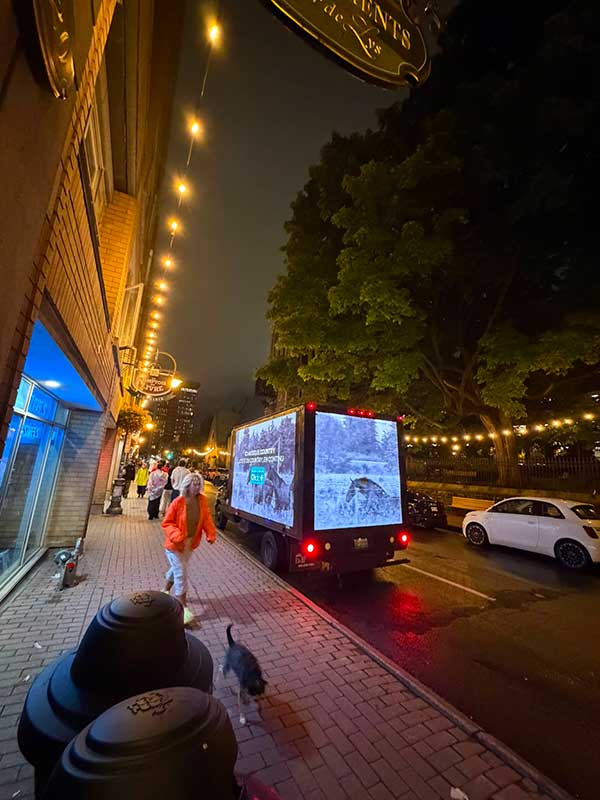
It’s the visual. A 10-foot LED screen moving through downtown traffic looks like it must be tightly controlled. In reality, most of what governs a mobile billboard truck already exists — it’s the same traffic, licensing, and sign framework that applies to any commercial vehicle with signage on it. Cities don’t need to invent new law for something that already fits inside existing categories.
That said, “legal” doesn’t mean “unregulated.” A handful of specific things do get checked, city by city.
What's Actually Regulated
Municipal Sign & Vehicle Bylaws
Most Canadian cities regulate mobile signage through their existing sign and licensing bylaws rather than a standalone “mobile billboard law.” Toronto, for example, governs mobile signs under its Signs and Licensing chapters of the municipal code. The rules mainly address where the vehicle can operate and how it’s licensed — not whether it can exist at all.
Parking & Stationary Time Limits
A moving truck generally doesn’t trigger special permitting. Park that same truck for hours in one high-traffic spot, though, and some municipalities treat it differently — closer to a temporary sign than a vehicle in transit. A few cities set limits on how long a mobile billboard can sit stationary in one location before it needs separate authorization.
Highway & Traffic Law
Trucks are vehicles first. Standard rules apply: no blocking intersections, no illegal idling, no parking in fire routes or restricted lanes. This isn’t advertising-specific — it’s the same traffic code every commercial vehicle already follows.
Screen Brightness at Night
LED displays are bright by design, which is the point — but several municipalities set brightness limits so screens don’t create glare or distract drivers after dark. Reputable operators calibrate brightness automatically by time of day, so this is typically handled at the equipment level, not something a client needs to manage.
Restricted Content Categories
This is where Canada does get stricter than a lot of jurisdictions. Certain ad categories — tobacco, and cannabis in particular — face placement and content restrictions under provincial advertising standards, especially near schools or places minors frequent. Political and alcohol advertising can also carry additional review depending on the province. This isn’t a mobile-billboard-specific rule — it applies to advertising broadly — but it’s worth knowing before creative goes into production.
Two cities worth naming directly: Vancouver and Montreal have, at different points, attempted broader restrictions on mobile billboard vehicles specifically, citing concerns like traffic and visual clutter. Montreal’s attempt was challenged in court on free-expression grounds, which left real uncertainty around how enforceable those restrictions actually are. The takeaway isn’t “avoid those cities” — it’s that route planning in any city should account for local nuance, which is exactly why working with an operator who already knows the terrain matters.
Blog
Box Truck Wraps vs. Digital LED Mobile Billboards
Worth separating these, because they’re regulated a little differently in practice.
A vinyl-wrapped box truck is a branded vehicle. Static image, no lighting, no video. It’s treated almost entirely like any other commercial vehicle on the road — minimal additional oversight.
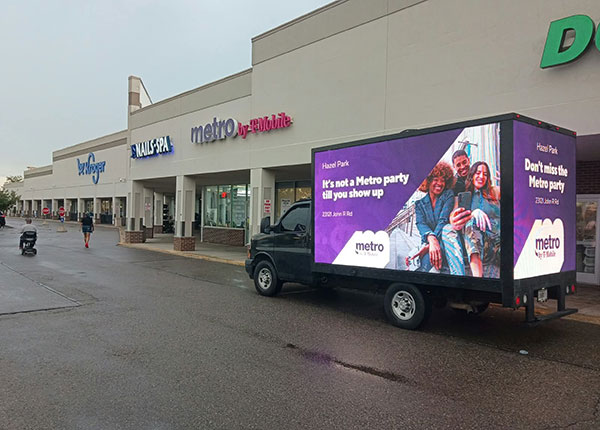
A digital LED mobile billboard carries video, animation, and rotating creative, which is why brightness and content rules apply more directly to this format. It’s also, screen for screen, a completely different level of impressions. That’s the trade-off: more regulatory awareness required, dramatically more attention earned.
Cities Where the Rules Get Specific
Rules aren’t identical from Toronto to Calgary to Montreal. A route that’s clean in one city can hit a restricted zone in another — government districts, certain event perimeters, specific residential streets during set hours. This is exactly the kind of detail that shouldn’t fall on the client to research city by city.
How Grow More Handles Compliance For You
This is the part that actually matters to you as an advertiser: you shouldn’t have to think about any of it.
Every Grow More campaign is planned with local bylaws, traffic patterns, and municipal restrictions built into the route from day one — not bolted on afterward. Our trucks operate compliant with Canadian transport and advertising regulations across all 70+ cities we run in, with GPS tracking and daily reporting so you can see exactly where your campaign ran and how it performed. Compliance isn’t a disclaimer here — it’s part of the routing strategy.
Book Your Compliant Mobile Billboard Campaign
Every route. Every bylaw. Already handled.
You focus on the creative — we’ll handle the regulations, the routing, and the reporting.
DM us to book your campaign. Slots filling fast for upcoming city activations.
FAQ
Q1: Is mobile billboard advertising legal in Canada?
A: Yes. Mobile LED billboard trucks are legal to operate across Canada. They’re regulated under municipal vehicle, signage, and licensing bylaws rather than the zoning rules that apply to permanent billboards.
Q2: Do mobile billboard trucks need a permit to drive through a city?
A: Typically no, while the truck is actively moving. Some municipalities require additional authorization if a truck parks in one high-traffic location for an extended period.
Q3: Are there restrictions on where a mobile billboard can park?
A: Yes, in some cities. Restricted zones can include government districts, high-congestion areas, or specific venue perimeters, depending on local bylaws.
Q4: Is box truck advertising the same as digital LED mobile billboard advertising?
A: Not quite. A box truck wrap is a static vinyl graphic, generally treated like standard vehicle branding. A digital LED mobile billboard displays video and rotating creative, which brings additional considerations like nighttime brightness limits.
Q5: Does Grow More handle regulatory compliance for clients?
A: Yes. Every Grow More campaign route is planned around municipal bylaws and traffic regulations in advance, across all 70+ Canadian cities we operate in.