
Eight hours. One mobile LED billboard truck. Thousands of opportunities to put your brand in front of the right audience.
But here’s the difference between simply renting a mobile billboard truck and running a successful advertising campaign: planning.
Where should the truck go? What time should it operate? Should it focus on busy downtown streets, shopping districts, business centres, or major events? And how do you make the most of every hour?
At Grow More Technology Group, we’ve managed mobile LED billboard advertising campaigns across Canada, from Toronto and Vancouver to Calgary, Edmonton, Ottawa, Montréal, and beyond. Our experience includes major sporting events, retail promotions, movie launches, tourism campaigns, trade shows, and community activations.
We’ve learned something important: a successful eight-hour campaign isn’t about driving around randomly. It’s about putting the right message in the right place at the right time.
Here’s how to plan an eight-hour mobile billboard advertising campaign in Canada, step by step.
Quick Answer: How Do You Plan an 8-Hour Mobile Billboard Campaign?
To plan an effective eight-hour mobile billboard advertising campaign, start by identifying your target audience and campaign objective. Select high-visibility locations, choose operating hours based on audience movement, build a practical driving route, prepare your LED screen creatives, and establish a reporting process.
A typical campaign includes:
- Audience targeting: Identify who needs to see your advertisement.
- Location selection: Choose shopping districts, commercial corridors, entertainment areas, or event locations.
- Timing: Schedule the truck around relevant traffic and pedestrian activity.
- Route planning: Organize locations into an efficient eight-hour itinerary.
- Creative preparation: Prepare high-quality images and videos for the LED screens.
- Campaign execution: Deploy the truck with an experienced driver.
- Performance reporting: Review GPS routes, campaign photographs, and estimated impressions.
With Grow More, clients receive route-planning support, an experienced driver, daily campaign photographs, GPS reporting, and post-campaign reporting.
The objective is simple: make every advertising hour count.
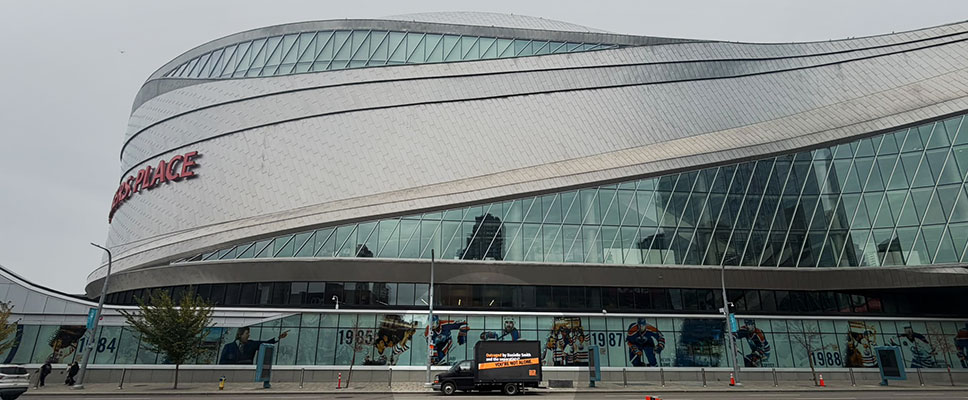
1. Why Choose an 8-Hour Mobile Billboard Advertising Campaign?
Eight hours provides enough time to reach multiple audience groups throughout a typical business day or event schedule.
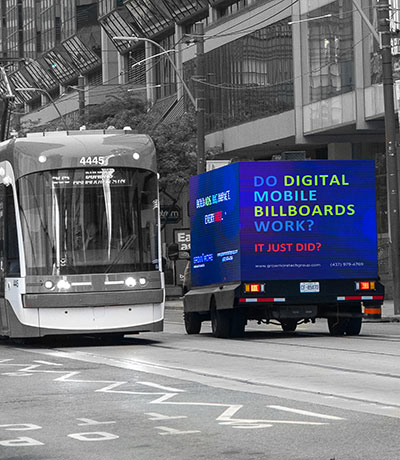
Unlike a fixed billboard that remains in one location, a mobile LED billboard truck can move between strategic areas as audience activity changes.
For example, a campaign might reach office workers during lunch, shoppers during the afternoon, and commuters or eventgoers in the evening.
Benefits of an 8-hour campaign
- Multiple audience opportunities: Reach different customer groups throughout the day.
- Flexible positioning: Move between priority locations as your campaign progresses.
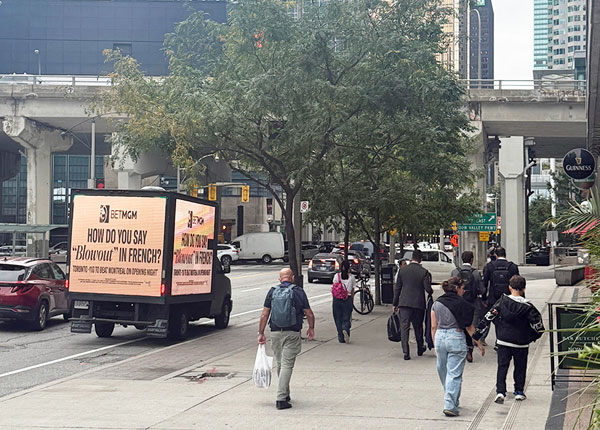
- High-visibility advertising: Display bright digital advertisements on three LED screens.
- Exclusive campaign exposure: Use the booked truck’s advertising screens exclusively for your brand or approved campaign creatives.
- Efficient campaign execution: Combine several strategic advertising zones into one coordinated schedule.
- Measurable delivery: Receive campaign photographs, GPS route information, and estimated impression reporting.
An eight-hour campaign is particularly useful for product launches, retail promotions, brand awareness campaigns, movie releases, festivals, trade shows, and community outreach.
For advertisers planning a larger activation, consecutive eight-hour campaign days can also build repeated exposure across selected neighbourhoods.
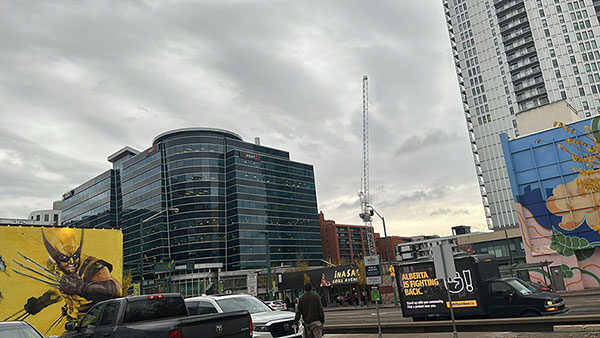
2. Start With Your Campaign Objective and Target Audience
Retail and grand opening campaigns
Focus on shopping centres, commercial plazas, major intersections, and surrounding residential shopping corridors. The goal is to build awareness near the business and encourage potential customers to visit.Corporate and B2B campaigns
Prioritize downtown business districts, convention centres, office clusters, and event venues. Timing can be especially important around conference registration, lunch breaks, and event departures.Entertainment and movie promotions
Consider entertainment districts, cinema areas, busy pedestrian corridors, and relevant event locations. Evening hours may be more useful when the campaign is designed to reach people planning entertainment activities.Festivals and sporting events
Plan around audience arrival and departure patterns, nearby gathering areas, and streets where the truck can legally operate. The goal isn’t simply to be near the event. It’s to be visible where the intended audience is likely to travel. Grow More planning tip: Don’t choose locations based on traffic volume alone. A smaller audience that matches your target customers can be more valuable than a larger, unrelated audience.3. Choose the Best Eight Hours for Your Campaign
Not every campaign needs to run from 9 AM to 5 PM.
The most effective schedule depends on the audience, city, weekday, season, and campaign objective.
| Campaign type | Suggested operating window | Primary audience |
|---|---|---|
| Corporate and B2B | 9 AM–5 PM | Professionals and business visitors |
| Retail promotion | 11 AM–7 PM | Shoppers and local residents |
| Restaurant promotion | 11 AM–7 PM | Lunch, afternoon, and dinner audiences |
| Entertainment launch | 2 PM–10 PM | Evening shoppers and entertainment audiences |
| Festival activation | Event-specific eight-hour window | Attendees and nearby visitors |
| General brand awareness | 10 AM–6 PM | Mixed commercial and pedestrian traffic |
These are illustrative planning windows, not guaranteed peak periods. Actual schedules should reflect local conditions and event activity.
For instance, a downtown Toronto campaign might benefit from lunch-hour business traffic, while a weekend retail campaign in Mississauga or Brampton may be better positioned around shopping activity.
The best advertising schedule follows your audience, not simply the clock.
4. Build a Strategic 8-Hour Mobile Billboard Route
Mobile billboard route planning is one of the most important parts of a successful mobile LED billboard campaign.
An effective route balances three things:
Visibility + Audience Relevance + Travel Efficiency
A truck that spends too much time travelling between distant locations may lose valuable exposure opportunities.
Instead, group nearby advertising zones into practical segments.
Example: Toronto mobile billboard advertising route
Let’s imagine a brand awareness campaign operating from 11 AM to 7 PM in Toronto.
| Time | Suggested area | Advertising objective |
|---|---|---|
| 11 AM–12 PM | Financial District and University Avenue | Reach downtown professionals |
| 12 PM–1 PM | King Street West and surrounding streets | Capture lunch-hour audiences |
| 1 PM–2 PM | Queen Street West | Reach retail and pedestrian audiences |
| 2 PM–3 PM | Spadina Avenue and nearby commercial corridors | Broaden neighbourhood exposure |
| 3 PM–4 PM | Bloor Street and Yorkville area | Reach shoppers and commercial audiences |
| 4 PM–5 PM | Yonge Street corridor | Target afternoon traffic |
| 5 PM–6 PM | Front Street and Union Station vicinity | Reach commuter and pedestrian audiences |
| 6 PM–7 PM | Entertainment District and nearby streets | Capture evening activity |
This is an example of audience-based planning, not a fixed or guaranteed driving itinerary. The final route must account for legal truck access, road restrictions, construction, traffic, safe stopping locations, and driver breaks.
For campaigns around major events, the route may be adjusted to prioritize venue arrival and departure activity.
What about Vancouver, Calgary, and other Canadian cities?
The same principle applies nationwide, but every city requires a different approach.
Vancouver: Consider downtown commercial areas, Burrard Street, Robson Street, Granville Street, and other suitable corridors based on local access restrictions.
Calgary: Depending on the campaign, consider downtown commercial districts, Beltline, shopping areas, and event-related routes near major venues.
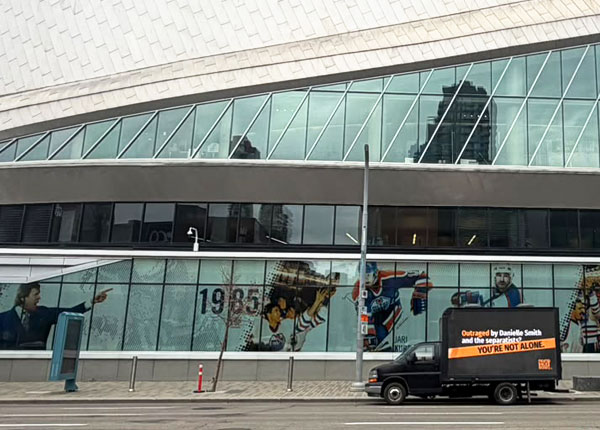
Edmonton: Retail corridors, downtown commercial streets, and suitable roads near Rogers Place may be relevant for sports or entertainment promotions.
Ottawa: Downtown commercial areas, ByWard Market surroundings, and suitable routes near convention or public event locations can be considered.
Montréal: Downtown shopping and entertainment corridors may be useful, subject to truck restrictions and local operating requirements.
Grow More develops campaign-specific routes rather than applying the same route to every advertiser.
For more detail, read our guide to choosing the best mobile billboard advertising routes.
5. Decide When the Truck Should Move or Remain Stationary
One of the biggest advantages of mobile billboard advertising is the flexibility to combine moving and stationary exposure.
Moving advertising
A moving LED truck can reach audiences across several neighbourhoods and commercial corridors.
This approach is useful for broad brand awareness, product promotions, and campaigns targeting multiple locations.
Stationary advertising
When legally permitted, a stationary truck can create repeated exposure near an event, retail location, or brand activation.
This can be particularly effective when audiences gather in one place for an extended period.
However, stationary advertising may require property-owner permission, municipal permits, or other approvals.
Grow More recommendation: For many eight-hour campaigns, a planned combination of moving exposure and permitted stationary positioning provides more flexibility than relying exclusively on one approach.
The final balance should reflect campaign goals, local restrictions, and safe operating conditions.
6. Prepare Your LED Billboard Creative Before Campaign Day
Grow More’s standard mobile LED truck specifications
Our standard three-screen configuration includes:| Screen | Creative resolution | Supported content |
|---|---|---|
| Left side | 1280 × 720 pixels | Images and video |
| Right side | 1280 × 720 pixels | Images and video |
| Rear screen | 720 × 720 pixels | Images and GIFs; video available on supported trucks |
Five creative recommendations
- Use a bold headline. Keep the main message short and easy to understand.
- Make your logo visible. Your brand should be recognizable immediately.
- Use strong contrast. Avoid small text and overcrowded designs.
- Include a clear call to action. A short website address, memorable offer, or QR code for stationary viewing can help.
- Keep video focused. Short, clear animations are generally more suitable than complex storytelling.
7. How Much Does an 8-Hour Mobile Billboard Campaign Cost in Canada?
A typical mobile billboard advertising campaign in Canada can cost approximately $1,200–$3,000 per day, depending on the city, vehicle availability, campaign requirements, and location.
For a standard eight-hour campaign, the following provides a practical planning reference.
| Budget component | Planning considerations |
|---|---|
| Truck and driver | Included in Grow More’s quoted campaign package |
| Eight-hour advertising period | Standard full-day campaign duration |
| Digital screen display | Included during the exclusive booking |
| Route planning | Coordinated based on campaign goals |
| Daily campaign photographs | Included |
| GPS and impression reporting | Included |
| Travel or special deployment | Additional charges may apply |
| Permits or special activation needs | Quoted when applicable |
Example: Toronto campaign
At a reference rate of $180 per hour:
8 hours × $180 = $1,440 CAD
Applicable taxes and any approved additional expenses would be calculated separately.
This is an illustrative standard-rate calculation, not a universal price guarantee.
Multi-day campaigns may qualify for discounted daily rates depending on the schedule and availability.
For current pricing, campaign requirements, and booking options, contact Grow More Technology Group for a customized quote.
8. What Happens During the Eight-Hour Campaign?
Planning is only half the work. Execution matters just as much.
A professional mobile LED billboard campaign requires coordination between the advertiser, campaign manager, and truck operator.
Before deployment
Grow More coordinates the agreed campaign schedule, operating area, creative files, and driver instructions.
During the campaign
The assigned driver follows the approved operating plan, adjusting for road conditions, traffic, safety requirements, and other operational considerations.
Campaign communication can be coordinated through a dedicated WhatsApp group when appropriate.
Campaign photographs
Photographs document the advertisement displayed on the truck during campaign operations.
These provide useful confirmation for clients, agencies, and campaign stakeholders.
GPS route reporting
GPS information helps demonstrate where the truck travelled during the booked campaign period.
Estimated impressions
Estimated impressions provide an indication of potential advertising exposure based on the reporting methodology and available audience or traffic information.
These figures should not be confused with verified unique viewers, guaranteed attention, website visits, or sales conversions.
At the end of the campaign, Grow More provides the agreed reporting deliverables, including photographs, GPS route information, and estimated impressions.
9. Common Mistakes to Avoid When Planning a Mobile Billboard Campaign
Even a strong advertisement can underperform when the campaign is poorly organized.
Mistake 1: Choosing locations based only on traffic
Heavy traffic does not automatically mean the right audience.
Better approach: Prioritize relevant locations with meaningful visibility opportunities.
Mistake 2: Spending too much time travelling
Trying to cover distant neighbourhoods in one day can reduce campaign efficiency.
Better approach: Build geographically sensible routes with nearby priority locations.
Mistake 3: Running at the wrong time
A great retail advertisement may miss its intended audience if the truck operates outside relevant shopping hours.
Better approach: Match the operating window to customer activity.
Mistake 4: Overloading the creative
Small text, long messages, and complicated visuals are difficult to absorb quickly.
Better approach: Use a clear headline, recognizable branding, and one primary call to action.
Mistake 5: Ignoring operating restrictions
Not every road, event area, or parking location is suitable for an advertising truck.
Better approach: Confirm local access, permits, and restrictions before finalizing the route.
Mistake 6: Forgetting campaign reporting
Without delivery records, it becomes harder to assess whether the planned campaign was executed.
Better approach: Confirm the reporting deliverables before the campaign begins.
10. Real Campaign Experience Makes a Difference
At Grow More Technology Group, campaign planning is based on actual operating experience across Canadian cities.
We’ve supported a wide range of advertising activities, including:
Korea Tourism: Extended mobile LED advertising campaigns requiring coordinated scheduling, routing, and reporting.
FIFA 2026: Mobile billboard operations in Toronto and Vancouver during a major international sporting event, with significant demand and complex daily logistics.
Calgary Stampede: Multi-truck advertising deployments during one of Canada’s most prominent annual events.
Movie and entertainment promotions: Campaigns associated with theatrical releases, entertainment events, and festivals, including activity around the Toronto International Film Festival.
Retail openings and promotions: Targeted campaigns designed to increase visibility near stores, shopping areas, and surrounding communities.
These experiences demonstrate why route planning, driver coordination, creative preparation, and reporting should be considered together.
Every campaign is different. The operating plan should reflect the advertiser’s objective rather than follow a one-size-fits-all template.
11. Your 8-Hour Mobile Billboard Campaign Planning Checklist
Before booking your campaign, make sure the following items are covered.
Campaign strategy
- Define your primary advertising objective.
- Identify your target audience.
- Select the city and campaign date.
- Determine the most relevant eight-hour operating window.
Route and locations
- Identify priority neighbourhoods and commercial areas.
- Group locations into an efficient route.
- Check event schedules and anticipated traffic patterns.
- Confirm road restrictions and any required permissions.
Creative preparation
- Prepare side-screen artwork at 1280 × 720 pixels.
- Prepare rear-screen artwork at 720 × 720 pixels.
- Confirm supported formats for the assigned truck.
- Check headline readability and call-to-action visibility.
Execution and reporting
- Confirm the driver and campaign schedule.
- Establish the communication process.
- Confirm photography and GPS reporting.
- Review estimated impressions and campaign delivery after completion.
A well-prepared checklist helps prevent last-minute changes and keeps the campaign focused on the advertiser’s goals.
12. Why Plan Your Mobile Billboard Campaign With Grow More?
A mobile billboard truck is more than a moving digital screen.
It’s an advertising platform that needs the right audience, route, creative, and operational support.
Grow More Technology Group provides mobile LED billboard advertising services across Canada, helping brands and agencies plan and execute campaigns in major markets and event locations.
What clients can expect
- Canada-wide campaign support: Coordinated deployments in major Canadian markets.
- Three-screen digital advertising: High-visibility LED displays suitable for video and static creative.
- Experienced drivers: Professional operation throughout the campaign.
- Custom route planning: Locations selected around your audience and campaign objectives.
- Flexible advertising strategies: Moving routes and permitted stationary activations.
- Campaign documentation: Daily photographs, GPS reporting, and estimated impressions.
- Multi-day campaign options: Extended advertising schedules for launches, events, and ongoing brand awareness.
Impressions that matter.
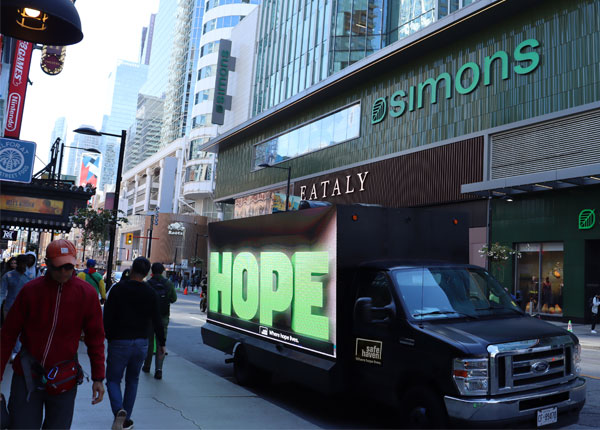
Frequently Asked Questions About 8-Hour Mobile Billboard Advertising
Is eight hours enough for a mobile billboard advertising campaign?
Yes. An eight-hour campaign provides time to reach multiple locations and audience groups within one operating day. Its effectiveness depends on the route, creative, timing, and target audience.
How much does an 8-hour mobile billboard campaign cost in Canada?
Typical mobile billboard advertising budgets in Canada range from approximately $1,200 to $3,000 per day. For example, an eight-hour campaign at $180 per hour costs $1,440 CAD before applicable taxes and additional approved expenses.
Can I choose the route for my mobile billboard truck?
Yes. Clients can suggest priority locations, neighbourhoods, and event areas. Grow More helps develop a practical route based on those objectives, subject to road restrictions, safety, traffic, and local regulations.
Can the truck park at my event or business location?
Stationary display may be possible when the location permits it. Property-owner permission, municipal permits, or other approvals may be required depending on the location and activation.
Can I display videos on the mobile LED billboard?
Yes. Grow More’s standard side screens support video and image advertising at 1280 × 720 pixels. Rear-screen content capabilities depend on the assigned vehicle.
Does an 8-hour campaign include a driver?
Yes. Grow More’s standard campaign packages include an assigned driver to operate the truck during the booked campaign.
How are mobile billboard advertising results measured?
Campaign delivery can be documented through GPS route information, campaign photographs, and estimated advertising impressions. Additional outcomes, such as website visits or customer inquiries, can be evaluated using advertiser-side tracking methods.
Can I book mobile billboard advertising for multiple days?
Yes. Grow More offers single-day and multi-day campaign options. Longer bookings can help advertisers increase repeated exposure and may qualify for discounted daily rates.
Ready to Plan Your 8-Hour Mobile Billboard Campaign?
Your next advertising campaign deserves more than a random driving route.
Whether you’re launching a new product, opening a store, promoting a festival, or building brand awareness, Grow More can help turn eight advertising hours into a coordinated campaign built around your audience.
One truck. Three LED screens. Eight hours of planned advertising exposure.
Let Grow More Technology Group help you take your message directly to the streets.
Request Your Mobile Billboard Advertising Quote
Visit growmoretechgroup.com to explore our mobile LED billboard advertising services across Canada.