
50,000 impressions in a day. What does that actually mean?
If you’re planning a mobile billboard advertising campaign in Toronto, Vancouver, Calgary or anywhere else in Canada, you’ve probably come across impression numbers.
50,000 daily impressions. 75,000 potential exposures. Sometimes more than 100,000 during a high-traffic campaign.
Those numbers sound impressive. But smart advertisers ask a better question:
How are mobile billboard advertising impressions actually calculated?
The answer involves more than simply counting passing vehicles. GPS location records, campaign operating information, audience estimates and exposure modelling can all contribute to understanding how many opportunities people had to see an advertisement.
At Grow More Technology Group, our mobile LED billboard campaigns are supported by GPS route tracking, campaign information and estimated impression reporting. That means advertisers receive more than a statement that their truck was on the road.
They receive information to help evaluate where the campaign operated and the potential advertising exposure it generated.
Let’s explain how it works.
Quick Answer: How Are Mobile Billboard Impressions Calculated?
Mobile billboard advertising impressions are estimates of how many times people had an opportunity to see an advertisement displayed on a moving or stationary billboard truck. Depending on the measurement system, calculations may use GPS location records, campaign operating times, traffic information, audience estimates and exposure modelling.
An impression represents a potential advertising exposure, not confirmation that someone looked at the screen.
The key distinction: GPS tracking documents campaign movement, while impression reporting estimates advertising exposure.
What is an Impression in Mobile Billboard Advertising?
An advertising impression represents an opportunity for an advertisement to be seen.
In mobile digital out-of-home advertising (DOOH), impressions help estimate potential exposure as an LED billboard truck moves through different locations.
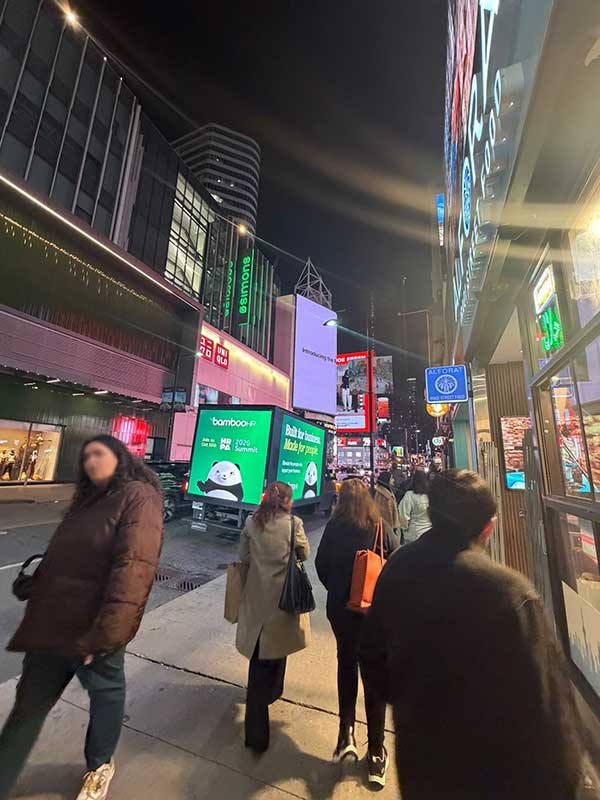
Consider a mobile LED truck travelling through downtown Toronto during the afternoon.
It passes office buildings, shopping areas, pedestrian crossings, restaurants and busy intersections.
Along the route, thousands of people may have opportunities to encounter the advertisement.
Those opportunities form the basis of impression estimates.
However, an impression does not necessarily mean:
- Someone looked directly at the screen.
- A person read the entire advertisement.
- The viewer remembered the brand.
- A customer visited the advertiser’s website.
- An individual made a purchase.
This distinction matters.
Advertising impressions measure estimated exposure opportunities. They do not automatically measure attention, engagement or conversions.
That’s true across many advertising formats, including outdoor advertising, digital display advertising and social media.

How Are Mobile Billboard Impressions Calculated?
Mobile billboard impression measurement combines information about campaign delivery with estimates of potential audience exposure.
The exact methodology depends on the measurement system. Not every system uses the same data sources or calculation rules.
Here are the key elements advertisers should understand.
1. GPS Tracking Establishes Where the Billboard Travelled
Location is one of the most important pieces of information in a mobile billboard campaign.
Unlike a traditional billboard fixed beside a road, a mobile LED advertising truck can travel through multiple neighbourhoods, commercial areas and event districts during a single campaign.
GPS tracking helps document the truck’s movement and operating locations.
For example, an eight-hour Toronto campaign might cover:
- Downtown Toronto and the Financial District
- King Street and Queen Street corridors
- Yonge Street commercial areas
- Entertainment District locations
- Shopping and pedestrian-focused neighbourhoods
A GPS-supported campaign record helps establish where the advertising vehicle travelled.
This is particularly useful for agencies and advertisers that need documentation of campaign delivery.
At Grow More, GPS route information is part of our campaign reporting process.
Why it matters: An advertiser can review the locations covered instead of relying only on a general description of the campaign.
2. Campaign Timing Helps Establish Exposure Opportunities
Location alone doesn’t tell the whole story.
The same street can have very different audience conditions depending on the time of day.
Think about a downtown business district.
At 8 AM, commuters are arriving at offices.
At noon, employees and visitors are walking between restaurants, shops and workplaces.
At 5 PM, evening traffic begins.
At 9 PM, the audience may shift toward entertainment, dining and nightlife.
Campaign timing therefore matters when estimating potential advertising exposure.
Depending on the measurement methodology, relevant information may include operating hours, time spent in particular areas and audience conditions during those periods.
For Grow More campaigns, our standard full-day advertising package is eight hours.
That gives advertisers the opportunity to plan routes around specific audience periods rather than simply sending a truck onto the road without a strategy.
Learn more in our guide to planning an 8-hour mobile billboard advertising campaign in Canada.
3. Traffic and Audience Information Can Support Impression Estimates
Traffic information can help estimate the number of potential advertising exposures in a particular location.
For example, a busy commercial road may have thousands of vehicles travelling through it during a campaign.
Pedestrian activity can also be relevant, especially in downtown districts, shopping areas and entertainment zones.
Depending on the measurement approach, available audience information may help estimate how many people could potentially encounter an advertisement.
But there’s an important difference between traffic volume and advertising impressions.
10,000 passing vehicles do not automatically equal 10,000 billboard impressions.
Vehicles may contain multiple occupants. Some road users may not have a reasonable view of the advertising screen. Pedestrians may encounter the same truck repeatedly.
Traffic counts, audience estimates and advertising exposure estimates are related concepts, but they aren’t interchangeable.
That’s why advertisers should understand what their impression figures represent.
4. Visibility and Exposure Conditions Matter
A mobile billboard truck can be physically present in an area without every nearby person having a clear view of the advertisement.
Potential exposure can depend on factors such as:
-
The direction of the advertising screen
-
The truck’s position relative to traffic and pedestrians
-
Viewing distance and surrounding obstructions
-
Whether the truck is moving or stationary
-
The time an advertisement is displayed
-
The measurement assumptions applied
Not every reporting system explicitly measures all these factors.
Nevertheless, they help explain why audience presence alone doesn’t prove an advertisement was viewed.
A well-planned mobile billboard campaign considers both audience concentration and practical screen visibility.
For example, a busy intersection with pedestrians, slow-moving vehicles and suitable sightlines may create valuable exposure opportunities.
But the best route isn’t necessarily the one with the highest traffic count.
It’s the one that puts the advertisement in front of the right potential audience.
5. Impression Reporting Summarizes Estimated Exposure
Once the relevant campaign and audience information has been processed, a measurement system may produce estimated advertising impressions.
The resulting figures can be summarized by campaign day, operating period, route or other available reporting dimensions.
At Grow More, our campaign dashboard displays estimated impression counts alongside GPS routes and campaign information.
This gives advertisers a practical way to review campaign activity and potential exposure.
It is important to understand that the displayed impression count is an estimate generated through the reporting system, not a direct count of every individual who looked at the screens.
Example: Calculating Impressions During an 8-Hour Mobile Billboard Campaign
Let’s look at a simplified example.
Imagine a mobile LED billboard truck operating in Toronto for eight hours.
The campaign covers four two-hour periods.
| Campaign period | Illustrative estimated impressions |
|---|---|
| 9 AM–11 AM | 12,500 |
| 11 AM–1 PM | 15,800 |
| 1 PM–3 PM | 18,200 |
| 3 PM–5 PM | 21,500 |
| Total | 68,000 |
In this example:
12,500 + 15,800 + 18,200 + 21,500 = 68,000 estimated impressions.
The figures are hypothetical and illustrate how period-level estimates could be added together. They are not an actual Grow More campaign report or a reproduction of our reporting system’s calculation method.
The total represents estimated advertising exposure opportunities during the campaign.
It does not mean 68,000 different people definitely saw the advertisement.
Some people may have encountered the truck more than once. Others may have been nearby without noticing the screen.
This is why impressions, reach and frequency should be understood separately.
Impressions vs. Reach vs. Frequency: What's the Difference?
These three advertising measurements are often confused.
| Metric | What it means |
|---|---|
| Impressions | Estimated number of advertising exposure opportunities |
| Reach | Estimated number of distinct people exposed |
| Frequency | Average number of exposures per person reached |
Consider an illustrative campaign that generates 80,000 estimated impressions among an estimated audience of 40,000 unique people.
Its average frequency would be:
80,000 impressions ÷ 40,000 people = 2 exposures per person.
But this calculation is only valid when a reliable, comparable reach estimate is available.
You cannot determine unique reach simply by looking at the total number of impressions.
For mobile billboard advertisers, this distinction is particularly important.
A truck may pass through the same commercial district multiple times during a campaign.
That repetition can create additional opportunities for the same audience to encounter the advertisement.
For a store opening, concert promotion or time-sensitive event, repeated exposure may be part of the campaign strategy.
However, impressions alone cannot tell advertisers exactly how many unique individuals were reached.
How Many Impressions Can a Mobile LED Billboard Generate in One Day?
A mobile LED billboard truck can generate tens of thousands of estimated impressions during a well-planned advertising day.
Grow More’s published campaign information references 50,000+ potential daily impressions per truck in suitable high-traffic conditions.
Some campaign reports may show higher or lower figures depending on location, timing, audience activity and route conditions.
This should be treated as a campaign performance reference, not a guaranteed minimum.
A mobile billboard operating in downtown Toronto during busy commercial periods may encounter very different audience conditions from a truck operating in a quieter suburban area.
Similarly, a campaign near a major sports event may experience concentrated pedestrian activity during specific periods.
The most useful question isn’t simply:
“How many impressions can a truck generate?”
It’s:
“How many relevant exposure opportunities can this campaign create in the locations and time periods that matter to my business?”
That’s where campaign planning makes a difference.
What Factors Affect Mobile Billboard Advertising Impressions?
Several factors can influence potential advertising exposure.
Campaign Location
Downtown districts, retail areas, commercial corridors and event surroundings can provide different audience opportunities.
A campaign targeting business professionals may benefit from office districts.
A campaign promoting a family-oriented retail store may prioritize shopping areas and residential-commercial corridors.
Time of Day
Morning commutes, lunch periods, evening rush hours and weekend shopping periods attract different audiences.
Selecting the right operating hours can help align the campaign with the intended audience.
Traffic and Pedestrian Activity
Audience concentration matters, but traffic volume alone doesn’t determine impression totals.
Road conditions, sightlines, screen orientation and the measurement methodology all affect how traffic information should be interpreted.
Route Planning
A truck that travels through relevant commercial areas may provide more valuable opportunities for a particular advertiser than one covering a larger geographic area without a clear audience strategy.
Campaign Duration
An eight-hour campaign provides more operating time than a four-hour campaign, but impressions should not automatically be assumed to double.
Actual estimates depend on where and when the campaign operates.
Events and Seasonal Activity
Concerts, festivals, sporting events, holiday shopping and tourism activity can change local audience patterns.
These are valuable opportunities for mobile billboard advertising, provided routes and operating plans comply with local regulations and access restrictions.
How Does Grow More Track and Report Mobile Billboard Campaigns?
At Grow More Technology Group, we believe advertisers should know where their campaign operated and receive meaningful documentation after the work is completed.
Our mobile LED billboard trucks are equipped with GPS tracking capabilities.
During a campaign, our reporting process supports visibility into the vehicle’s route and operating information.
Depending on the agreed campaign scope, reporting can include:
- GPS route records: Documentation showing where the advertising truck travelled.
- Campaign operating information: Details associated with the scheduled advertising activity.
- Estimated impression counts: Dashboard-generated figures representing potential advertising exposure.
- Daily campaign photographs: Visual documentation of the advertising truck and displayed creative during campaign operations.
- Post-campaign reporting: A summary of agreed campaign deliverables and available performance information.
These records help advertisers review campaign execution and understand the estimated exposure associated with the activity.
For marketing agencies managing campaigns across several cities, consistent reporting also supports internal reviews and client presentations.
The goal is simple:
Show where the campaign ran. Document the advertising activity. Report estimated exposure responsibly.
Real Campaign Experience: What Grow More's Reporting Represents
Impression reporting becomes more meaningful when supported by real campaign experience.
Grow More has coordinated mobile LED billboard advertising for tourism, retail, entertainment, corporate and event campaigns across Canada.
By September 30, 2026, Grow More had completed 288 mobile digital out-of-home campaigns during the first nine months of 2026.
Across its broader operating history, the company has reported:
- More than 70 Canadian cities covered
- Campaign activity across eight provinces
- More than 200,000 kilometres travelled
- Over 10 million estimated advertising impressions
These cumulative figures demonstrate the scale of Grow More’s campaign operations and reporting history.
The 10 million impression figure represents estimated exposure opportunities across campaigns, not 10 million verified unique viewers.
For more background, read Grow More’s 288 mobile billboard campaign milestone.
Why Real Campaign Data Matters
A planned route is useful.
An actual GPS route record is stronger evidence of where a truck operated.
An estimated impression count adds another measurement dimension.
Campaign photographs provide visual documentation.
Together, these reporting elements give advertisers a clearer understanding of campaign delivery than a standalone impression figure.
That doesn’t eliminate uncertainty from outdoor advertising measurement.
It creates a more informed basis for evaluating the campaign.
Can Mobile Billboard Impressions Be Verified?
This depends on what advertisers mean by “verified.”
GPS tracking can help verify that an advertising vehicle travelled through recorded locations during the campaign.
Photographs can document the displayed advertisement at particular moments.
Operating information can help establish campaign delivery.
However, those records do not independently verify that every estimated impression resulted in a person actually looking at the screen.
A distinction should therefore be made between:
Verified campaign delivery: Evidence that the truck operated along recorded routes and that campaign activity was documented.
Estimated advertising impressions: Modelled opportunities for people to encounter the advertisement.
Verified individual attention: Direct evidence that a particular person looked at an advertisement, which should not be assumed from GPS records or impression estimates.
For advertisers comparing outdoor media proposals, understanding these differences helps prevent misleading performance comparisons.
How Can Advertisers Measure Results Beyond Impressions?
Impressions are valuable for understanding estimated advertising exposure.
But they’re only one part of evaluating campaign performance.
If your business wants to measure direct customer response, consider combining mobile billboard advertising with additional tracking methods.
Dedicated Landing Pages
Create a campaign-specific website page.
For example, a retail brand could direct customers to a unique promotional URL displayed on the billboard.
Website analytics can then help identify visits to that page.
QR Codes
QR codes may help track direct interactions when the truck is stationary or when viewers have sufficient time and safe conditions to scan.
For moving billboard campaigns, short, memorable URLs are often more practical.
Promotional Codes
A unique campaign code can help connect redemptions to a particular promotion.
Branded Search Activity
Advertisers can compare branded search interest before, during and after a campaign.
Changes may indicate increased awareness, although they cannot automatically be attributed entirely to the mobile billboard.
Store Visits and Enquiries
Retailers and service businesses can review customer enquiries, appointment requests and store activity during the campaign period.
These indicators provide additional context, especially when combined with a clear campaign objective.
The strongest campaign evaluation combines estimated advertising exposure with business-specific performance indicators.
How to Calculate Mobile Billboard CPM
CPM means cost per thousand impressions.
It is a common advertising metric used to compare the estimated cost of exposure across different media channels.
The formula is:
CPM = (Campaign Cost ÷ Estimated Impressions) × 1,000
For example, suppose an advertiser spends $1,440 on a mobile billboard campaign that reports 60,000 estimated impressions.
The calculation would be:
($1,440 ÷ 60,000) × 1,000 = $24 CPM
In this hypothetical example, the campaign has an estimated CPM of $24.
This is not a guaranteed Grow More CPM or a quote for a particular campaign.
CPM can be useful when comparing media options, but it shouldn’t be the only deciding factor.
A campaign reaching the right audience in a relevant location may be more valuable than a lower-cost campaign generating exposure opportunities among less relevant audiences.
For current pricing considerations, read our mobile billboard advertising cost guide for Canada.
Why Mobile Billboard Impression Reporting Matters for Canadian Advertisers
Canadian advertisers are increasingly expected to explain how marketing budgets are being spent.
Whether the campaign involves a national brand, local retailer, tourism organization or marketing agency, decision-makers want more than photographs of an advertisement.
They want documentation.
They want to understand where the campaign operated.
They want a reasonable estimate of potential audience exposure.
And they want to know what the reported numbers actually mean.
Mobile billboard advertising offers a distinctive combination of physical street-level visibility, flexible route planning and campaign documentation.
Unlike a fixed billboard, a mobile LED advertising truck can cover several relevant locations during one scheduled campaign.
With GPS-supported reporting, advertisers can review the route activity associated with that campaign.
With estimated impression reporting, they can also evaluate potential exposure using the available measurement information.
For businesses planning their first campaign, our guide to choosing a mobile billboard advertising company in Canada explains what to look for in a reliable advertising partner.
Why Advertisers Choose Grow More for GPS-Tracked Mobile Billboard Advertising
Grow More Technology Group provides mobile LED billboard advertising services across Canada, helping brands bring their messages directly to relevant streets, neighbourhoods and event areas.
Our mobile billboard trucks feature three digital LED advertising screens, typically including:
- Two side screens with 1280 × 720-pixel creative formats
- A rear screen with a 720 × 720-pixel creative format
- High-brightness displays for daytime and evening visibility
- Video and image advertising capabilities, depending on the assigned screen
But equipment is only part of the service.
Grow More campaigns also emphasize strategic routes, professional drivers, campaign coordination, GPS tracking, daily documentation and estimated impression reporting.
Whether you’re launching a new store in Mississauga, promoting a concert in Toronto, supporting a tourism campaign in Vancouver or planning a multi-city advertising campaign, our team can help develop a route and schedule around your objectives.
We focus on more than putting an advertisement on a truck.
We focus on getting the campaign on the road, documenting its delivery and providing reporting that advertisers can understand.
Frequently Asked Questions About Mobile Billboard Impressions
How are mobile billboard advertising impressions calculated?
Mobile billboard impressions are estimates of advertising exposure opportunities. Depending on the measurement methodology, calculations may use GPS location records, operating times, traffic information, audience estimates and exposure modelling. The results represent potential exposures rather than confirmed individual views.
Does GPS tracking measure how many people see a mobile billboard?
No. GPS tracking records the advertising truck’s location and movement. It does not directly count how many people look at the billboard. Impression estimates require a measurement methodology beyond location tracking alone.
How many impressions can a mobile LED billboard generate in eight hours?
A mobile LED billboard may generate tens of thousands of estimated impressions during an eight-hour campaign. Grow More references 50,000+ potential daily impressions in suitable high-traffic conditions, although actual estimates vary by location, timing and campaign conditions.
What is the difference between impressions and reach?
Impressions represent estimated advertising exposure opportunities, while reach represents the estimated number of distinct people exposed. Multiple impressions may come from the same person encountering an advertisement more than once.
Can mobile billboard advertising impressions be verified?
Campaign delivery can be documented through GPS route records, operating information and photographs. However, estimated impressions should not be described as verified individual views unless an appropriate measurement methodology supports that claim.
Do mobile billboard impressions include pedestrians and vehicles?
Potential advertising exposure may involve vehicle occupants and pedestrians. Whether and how those audiences are included depends on the impression measurement system and the data available.
Does traffic congestion increase mobile billboard impressions?
Slow-moving traffic can create longer potential viewing opportunities, but it does not automatically increase measured impressions. The result depends on audience conditions, screen visibility and the applicable measurement methodology.
How does Grow More measure mobile billboard advertising performance?
Grow More uses GPS-supported campaign reporting that includes dashboard-generated estimated impression counts alongside route and campaign information. Depending on campaign scope, advertisers can also receive daily photographs and post-campaign documentation.
Final Thoughts: Understand the Numbers. Plan Better Campaigns.
Mobile billboard advertising impressions aren’t simply a count of vehicles passing a truck.
They are estimates of potential advertising exposure, informed by the data and assumptions used in the applicable measurement system.
GPS tracking helps document where the campaign operated.
Impression reporting helps advertisers understand estimated exposure.
Campaign photographs and operating information provide additional evidence of delivery.
And thoughtful route planning helps put the advertisement in places that matter.
At Grow More Technology Group, our approach combines mobile LED billboard advertising with strategic campaign execution and GPS-supported reporting.
Because effective outdoor advertising isn’t just about being seen.
It’s about choosing the right locations, reaching relevant audiences and understanding what your campaign delivered.
Impressions that matter.
Ready to Plan Your Next Mobile Billboard Advertising Campaign?
Bring your brand to Toronto, Vancouver, Calgary, Edmonton, Ottawa, Montreal and other Canadian markets with Grow More’s mobile LED billboard advertising services.
Our team can help plan an eight-hour campaign, multi-day promotion or coordinated multi-city activation with GPS-supported reporting.
Contact Grow More
Phone: +1 437-979-4769
Your Brand’s Canvas Starts Here.