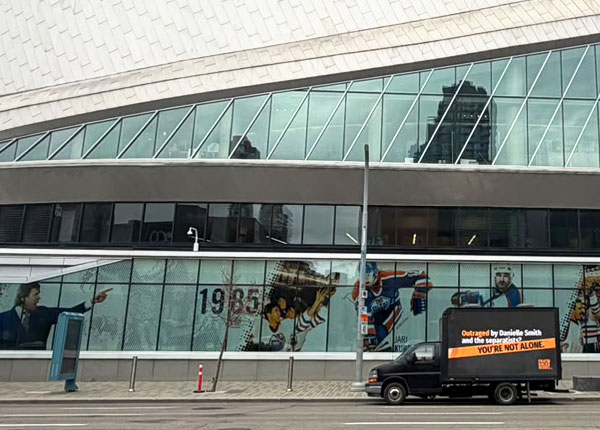
1. Introduction
Many businesses think mobile digital billboard advertising is simple.
“Put an ad on a truck and drive.”
Sounds easy, right?
Well… yes and no.
In Canada, digital mobile billboard advertising doesn’t mean “no rules.” It means different rules compared to traditional static billboards. And understanding that difference is where smart brands win.
At Grow More Technology Group Corp., we operate LED mobile billboard trucks across Toronto, Vancouver, Calgary, Edmonton and nationwide. We work within Canadian traffic laws, municipal bylaws, and safety standards — so our clients can focus on visibility while we handle compliance.
Let’s break it down clearly.
2. What Makes Mobile LED Billboard Advertising Different
Traditional billboards are fixed structures.
That means:
- Zoning approvals
- Land permits
- Long-term lease agreements
- Municipal sign regulations
- Structural compliance
Once installed, you’re locked into that one location.
Mobile LED billboard trucks operate differently. They are licensed commercial vehicles, not permanent structures. That changes the regulatory framework entirely.
Instead of land-use zoning laws, campaigns operate under:
- Provincial traffic regulations
- Municipal parking bylaws
- Road safety standards
- Vehicle operation laws
This flexibility allows campaigns to move with real-world traffic patterns — morning rush hour in downtown Toronto, weekend events in Vancouver, or stadium traffic in Calgary.
3. Why the Rules Are Structured Around Movement

Movement is the key difference.
Because LED billboard trucks are mobile:
- They are not subject to permanent signage zoning rules.
- They must comply with road safety and transportation laws.
- They must follow municipal parking restrictions.
- Brightness levels must meet safety standards (especially at night).
In Canada, each municipality may have slight variations in bylaws. For example:
- Downtown Toronto parking restrictions differ from suburban zones.
- Event areas near stadiums may require route planning.
- Certain intersections have stopping limitations.
That’s why route planning is not random — it’s strategic and compliant.
At Grow More, we design routes carefully to ensure:
- High visibility
- Legal operation
- Zero disruption
- Maximum impressions (50,000+ daily per truck)
4. Creative Freedom & Brand Messaging in Canada
Mobile LED billboard advertising in Canada offers strong creative flexibility — but it’s not a “free-for-all.”
Canadian advertising laws still apply, including:
- Competition Act regulations
- Health Canada advertising guidelines
- Provincial alcohol marketing restrictions
- Cannabis advertising compliance (federal & provincial)
Election advertising laws during campaign periods
However, mobile LED trucks provide an advantage:
You can strategically target specific zones, events, and audiences instead of relying on a single fixed billboard location.
Industries that often prefer mobile LED advertising include:
- Political campaigns (within Elections Canada rules)
- Cannabis brands (following provincial regulations)
- Alcohol brands (event-based targeting)
- Sports betting & gaming platforms
- Event promoters
- Retail grand openings
- Restaurant launches
Instead of being rejected by large static billboard networks due to “brand safety policies,” mobile campaigns allow for more flexible planning within legal boundaries.
5. What Rules Still Apply in Canada
Let’s be clear — compliance matters.
Key considerations include:
✔ Municipal parking duration limits
✔ Noise and brightness control
✔ Road obstruction rules
✔ Event permit coordination
✔ Content compliance (no misleading claims)
✔ School-zone or sensitive-area restrictions
For recurring campaigns in the same area, additional permissions may sometimes be required depending on the city.
That’s why working with an experienced operator is critical.
At Grow More, we handle:
- Route compliance
- GPS tracking
- Brightness adjustments
- Daily proof-of-play reporting
- Photo documentation
- Geofencing integration
So clients stay focused on ROI — not regulations.
6. Why More Canadian Brands Are Choosing Mobile LED Advertising
The shift isn’t about avoiding rules.
It’s about working smarter within them.
Here’s why brands across Canada are leaning into mobile LED billboard campaigns:
- Faster launch timelines
- No long-term land contracts
- Multi-city flexibility
- Event targeting
- Dynamic content switching
- Real-time creative updates
- GPS-verified route reporting
- Geofencing retargeting options
Instead of waiting weeks for approvals on a static board, campaigns can activate quickly and move where attention actually is.
That’s powerful.
7. Real-World Canadian Use Cases
We’ve supported campaigns where flexibility changed the outcome:
- Auto brands activating around the Metro Toronto Convention Centre
- Event campaigns circling major sports venues
- Retail store openings targeting high-footfall plazas
- Community awareness initiatives across downtown cores
- Multi-city tours across Ontario, Alberta, and British Columbia
Because the campaign moves, your brand meets your audience where they already are.
8. Final Thoughts
Are mobile digital billboard advertising rules in Canada more lenient?
Not exactly.
They’re just structured differently — around vehicles, traffic laws, and municipal bylaws instead of land zoning and fixed structures.
When executed properly, this format becomes:
- More agile
- More responsive
- More strategic
- More cost-efficient
- More measurable
And when compliance is handled correctly, your campaign runs smoothly without disruption.
If you’re planning a product launch, political awareness campaign, grand opening, or nationwide activation, mobile LED billboard advertising gives you control — legally and strategically.
Frequently Asked Questions About Mobile Billboard Advertising Rules in Canada
1. Is mobile digital billboard advertising legal in Canada?
Yes, mobile digital billboard advertising can be legal in Canada when campaigns comply with applicable federal, provincial, and municipal requirements. Rules may cover vehicle safety, advertising content, road use, parking, illuminated displays, and local signage bylaws. Advertisers should verify requirements in each city before launching a campaign.2. Do mobile LED billboard trucks require advertising permits in Canada?
Permit requirements depend on the municipality and how the truck is being used. Driving an advertising truck on public roads, parking it for promotional purposes, and operating it at a special event may involve different regulations. Additional permits or permissions may be required for stationary displays, public property, or designated event areas.3. Can mobile billboard trucks advertise while driving on Canadian roads?
Mobile billboard trucks may operate on public roads where permitted, provided they comply with applicable traffic, vehicle safety, lighting, and municipal advertising regulations. Restrictions may apply to certain roads, vehicle types, display brightness, and moving or distracting digital content.4. Can mobile LED billboard trucks park near shopping malls, stadiums, and public events?
Mobile LED billboard trucks may advertise near shopping centres, stadiums, festivals, and event venues where legally permitted. Parking restrictions, private property permissions, event regulations, and municipal signage bylaws must be considered. Permission from a property owner or event organizer may be necessary for stationary activations.5. Are there restrictions on advertising content displayed on mobile LED billboards?
Yes. Mobile LED billboard advertising must comply with applicable Canadian advertising laws and regulations, including restrictions involving misleading claims and certain regulated products or services. Additional requirements may apply to political advertising, alcohol, cannabis, healthcare-related promotions, and other regulated categories. Municipal rules may also restrict distracting or excessively bright displays.6. Are mobile LED billboard trucks allowed on highways in Canada?
Highway access depends on the jurisdiction, vehicle classification, and applicable road restrictions. Some routes may prohibit certain types of advertising vehicles or impose restrictions on illuminated displays. Advertisers should confirm approved routes before scheduling campaigns and should not assume that all highways permit mobile billboard advertising.7. Who is responsible for ensuring a mobile billboard campaign complies with local regulations?
Compliance responsibilities depend on the advertising agreement and applicable laws. The mobile billboard operator is generally responsible for lawful vehicle operation, while advertisers remain responsible for the legality of their advertising content. Grow More Technology Group coordinates campaign routing and operational planning, with any necessary permits and approvals addressed according to the campaign requirements.Ready to Plan Your Campaign?
Let’s design a route that’s compliant, visible, and impossible to ignore.
– Nationwide Canada Coverage
– 50,000+ impressions daily per truck
– GPS tracking & geofencing
– Call: 437-979-4769
– DM Grow More today
Grow More Technology Group Corp.
Impressions that matter.